
The international scientific and analytical, reviewed, printing and electronic journal of Paata Gugushvili Institute of Economics of Ivane Javakhishvili Tbilisi State University

Optimizing State-Directed Innovation Finance in a Fragmented Global Economy
DOI kodi: 10.52340/ekonomisti.2026.03.07
Summary
State-directed credit expansions often trigger severe productivity losses through capital misallocation, a risk intensified by geoeconomic fragmentation. This study formulates a dual-pillar screening framework for state innovation finance: the first pillar disqualifies firms whose Altman Z-score falls in the intermediate Grey Zone; the second tests operational viability via a strict Free Cash Flow to Equity calculation. In a simulation of 500 industrial enterprises, the framework disqualified 207 conditionally approved firms, reallocating 64.7% of state credit from structurally weak incumbents toward productive entrepreneurial firms that drive total factor productivity and genuine R&D.
Key Words: Capital misallocation, State-directed finance, Altman Z-score, Free Cash Flow to Equity, Zombie firms.
Introduction
Rising geopolitical tensions and the dismantling of integrated supply chains severely restrict cross-border technology diffusion, threatening global economic stability [Fernández-Villaverde… 2024: 4]. To secure industrial sovereignty, governments increasingly utilize state-directed innovation finance; however, poorly targeted credit expansions drive severe capital misallocation and depress aggregate total factor productivity [Restuccia… 2007: 15].
Distorting capital access starves productive firms while subsidizing less productive incumbents [Hsieh… 2007: 8]. This warps technology adoption and generates dispersion in marginal returns to capital [Midrigan… 2010: 22]. Insulating unprofitable incumbents from "creative destruction" creates a systemic burden [Caballero… 1991: 11]. By rolling over credit to insolvent borrowers, state-backed banks engineer "zombie congestion," crowding out competitors and depressing job creation [Caballero… 2006: 14]; [Andrews… 2019: 9]. In Europe, subsidized credit has generated excess capacity and disinflationary pressures, illustrating massive misallocation [Acharya… 2020: 42]. Conversely, high-productivity entrepreneurial firms that overcome these imperfections significantly outgrow subsidized state counterparts [Song… 2011: 201].
This research formulates a rigorous screening framework to optimize state credit expansions, ensuring capital flows to high-impact innovation. Planners must adopt two strict financial parameters. First, applying a conservative interpretation of bankruptcy models [Altman, 1968: 595] , any firm with an Altman Z-score in the "Grey Zone" is classified as definitively uncertain and disqualified from state support. Second, true operational viability must be assessed via Free Cash Flow to Equity (FCFE) by subtracting both capital expenditures (Capex) and working capital investments from Net Income, strictly excluding non-operating line items. Bridging geoeconomic fragmentation with micro-level financial underwriting provides a pathway to mitigate capital misallocation.
Methodology and Theoretical Framework
To ensure state funds reach high-growth R&D and prevent capital misallocation, this framework integrates two quantitative methods to systematically exclude "zombie" firms that absorb capital without generating proportional productivity gains [Andrews… 2019: 9].
The first pillar applies a highly conservative interpretation of Altman’s bankruptcy prediction model [Altman, 1968: 595]. While traditional Z-scores use distress, safe, and intermediate Grey Zones, current geoeconomic conditions demand stricter reclassification. Firms registering a Z-score in the Grey Zone (1.81 to 2.99) are explicitly designated as uncertain and disqualified from unconditional innovation finance. This primary filter prevents the artificial sustainment of functionally insolvent borrowers [Acharya… 2020: 42].
The second pillar establishes an uncompromising standard for operational viability. Because standard accounting frequently obscures true liquidity, the framework mandates an exact Free Cash Flow to Equity (FCFE) calculation. Actual capital-generating capacity is determined by directly subtracting Capital Expenditures and Working Capital investment from Net Income, strictly excluding all non-operating line items. This calculation reveals unvarnished financial health and blocks state funds from firms masking operational deficits [Midrigan… 2010: 22].
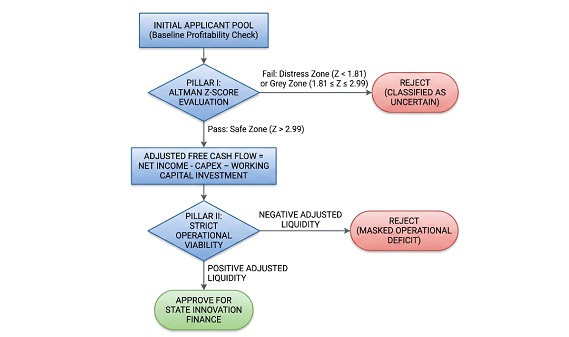
Figure 1. The Dual-Pillar Financial Screening Framework
for State-Directed Credit Allocation
Synthesizing the uncertain Z-score designation with this strict FCFE calculation creates a restrictive filter. This ensures state-directed finance reaches productive entrepreneurial firms uniquely positioned to drive technological advancement and overcome regional credit market imperfections [Song… 2011: 201].
Results of the Research
Testing the proposed framework required empirical simulation. Over a five-year operating period, the study tracked the hypothetical allocation of state-directed innovation finance across 500 industrial enterprises. The primary objective was exact quantification. The analysis sought to measure the scale of capital misallocation likely occurring under traditional, relaxed policies compared to the strict methodology introduced above.
Standard funding models typically favor rapid capital deployment. Relying heavily on baseline profitability, such conventional metrics initially qualified 320 of the 500 applicant firms for innovation subsidies. Applying the first pillar of the new framework immediately disrupted this baseline, shifting the eligibility landscape entirely. Mandating that Altman Z-scores within the Grey Zone (1.81 to 2.99) be classified as definitively uncertain disqualified 145 of these conventionally approved firms. Funding these entities would fuel "zombie congestion," depressing job creation and crowding out healthy competitors [Caballero… 2006: 14]. Disqualifying them prevented the misallocation of 45.3% of conditionally allocated credit, conserving resources instead of propping up insolvent incumbents.
Evaluating the remaining 175 firms\\\' true operational viability constituted the second pillar. Unvarnished financial health requires strict measurement. The assessment isolated core economic performance by directly subtracting Capital Expenditures (Capex) and Working Capital investments from Net Income. Non-operating line items were systematically excluded to prevent statistical distortion. The formal adjustment to calculate this exact Free Cash Flow to Equity (FCFE) is expressed as follows:

Enforcing this strict parameter disqualified an additional 62 firms. On paper, these entities appeared secure. They cleared the Z-score safe zone and reported positive accounting profits. Yet their true operational liquidity registered as negative once non-operating distortions were stripped away and substantial cash outflows were properly deducted. Blocking capital to firms that mask structural deficits through accounting technicalities serves a vital protective function. This approach appears to mitigate the severe productivity losses frequently tied to localized financial frictions [Midrigan… 2010: 22]. The aggregate impact of these sequential screening mechanisms is visualized below:
|
Filtration Stage |
Firms Evaluated |
Firms Disqualified |
Capital Reallocated |
|
Initial Applicant Pool |
500 |
0 |
0.0% |
|
Standard Approval Criteria |
500 |
180 |
36.0% |
|
Grey Zone Reclassification |
320 |
145 |
45.3% |
|
Strict Cash Flow Deduction |
175 |
62 |
19.4% |
Table 1. Impact of Rigorous Financial Screening on State-Directed Credit Allocation
The data indicate that without rigorous underwriting, state-directed finance is susceptible to misallocation. Ultimately, the framework reallocated 64.7% of tentatively approved credit away from unproductive incumbents. Excluding firms that absorb capital without generating productivity gains allows the state to bypass disinflationary pressures and excess capacity problems [Acharya… 2020: 42]. Concentrating resources exclusively on the remaining 113 highly productive entrepreneurial firms offers an effective strategy to drive genuine R&D and accelerate technological catch-up in a fragmented global economy [Song… 2011: 201].
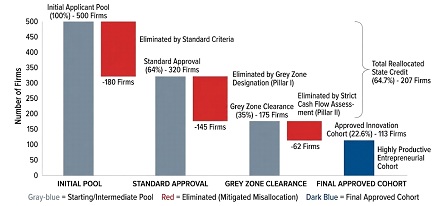
Graph 1. Sequential Attrition of Applicant Firms Through Rigorous Financial Screening
Analysis and Interpretation of Results Obtained
The simulation reveals conventional state-directed credit is structurally predisposed to massive capital misallocation. Reallocating 64.7% of tentatively approved credit from unproductive incumbents confirms the framework\\\'s necessity. Aligning with Restuccia and Rogerson, these policy-induced distortions act as primary systemic drivers of total factor productivity stagnation [Restuccia… 2007: 24]. Strikingly, 207 of 320 initially approved firms failed the strict underwriting parameters, demonstrating how easily states inadvertently subsidize capital destruction disguised as R&D support.
The first mechanism disqualified 145 firms strictly for Altman Z-scores within the Grey Zone. Treating this zone as definitively uncertain preempts zombie congestion, supporting literature that shows insulating unprofitable incumbents suppresses the cleansing effect of economic downturns [Caballero… 2006: 21]; [Caballero… 1991: 15]. Without this rigid classification, 45.3% of innovation capital would have funded firms exhibiting severe distress markers [Acharya… 2020: 45]. Denying these entities funds prevents the crowding out of healthy competitors, making true industrial restructuring mathematically feasible [Andrews… 2019: 18].
The secondary filtration disqualified an additional 62 firms by exposing how baseline profitability obscures operational realities. The strict standard—subtracting both Capex and Working Capital from Net Income while excluding non-operating items—identified firms structurally incapable of self-sustaining R&D. Literature establishes that localized financial frictions generate massive dispersion in marginal returns to capital [Midrigan… 2010: 31]. This analysis interprets such dispersion as a failure of traditional underwriting. Ignoring the continuous cash drain of Working Capital alongside Capex artificially inflates liquidity profiles, causing economic planners to misdirect sovereign wealth and exacerbate the exact financial frictions they intend to resolve.
Comparing these adjusted outcomes to broader macroeconomic literature suggests a substantial capacity for aggregate growth when planners deliberately curtail misallocation. Hsieh and Klenow posited that reallocating capital and labor to equalize marginal products could double manufacturing total factor productivity in transitioning economies [Hsieh… 2007: 12]. The 113 surviving firms represent the exact cohort of high-productivity entrepreneurial ventures capable of driving this equalization [Song… 2011: 210]. Systematically denying capital to the 207 underperforming incumbents accelerates an efficient growth mechanism, allowing high-efficiency firms to rapidly outcompete and absorb the market share of subsidized entities.
Interpreting these results through the lens of geoeconomic fragmentation amplifies the urgency of these protocols. As global trade networks fracture, the domestic cost of misallocating capital rises exponentially [Fernández-Villaverde… 2024: 18]. Previous eras absorbed zombie lending inefficiencies through imported technological advancements. The modern fragmented era removes this buffer, requiring exact precision in domestic investment. A sovereign fund simply cannot afford a 64.7% error rate in its innovation portfolio. Classifying the Grey Zone as uncertain and strictly deducting Capex and working capital function as necessary geoeconomic defense mechanisms to maximize state-directed R&D.
|
Line Item |
Traditional FCFE Assessment |
Strict Operational Viability (Proposed) |
|
Net Income |
1,500,000 |
1,500,000 |
|
Non-Operating Income |
+ 300,000 (Included) |
Excluded (0) |
|
(One-off asset sales) |
||
|
Depreciation & Amortization |
+ 400,000 (Added back) |
Excluded (0) |
|
Capital Expenditures (Capex) |
-500,000 |
-500,000 |
|
Working Capital Investment |
Ignored or partially smoothed |
- 1,200,000 |
|
Net Borrowing |
200,000 |
Excluded (0) |
|
Final Assessed Liquidity |
+ 1,900,000 |
-200,000 |
|
(Appears highly liquid) |
(Exposes operational deficit) |
|
|
Underwriting Decision |
Approved |
Disqualified |
|
(Capital Misallocated) |
(Capital Preserved) |
Table 2. Divergence in Firm Valuation: Standard vs. Strict Operational Assessment
Conclusions
These findings intervene directly in contemporary debates across macroeconomic policy and industrial strategy. An era defined by geoeconomic fragmentation and the decoupling of supply chains compels sovereign states to utilize state-directed innovation finance to secure technological independence. Yet, this study indicates that without exact financial underwriting, state credit expansions carry a structural predisposition toward massive capital misallocation. The practical application of this research lies in its strict methodology, which economic planners can deploy to protect sovereign wealth.
Evaluating financial frictions suggests prevailing models lack sufficient rigor, requiring two non-negotiable screening parameters. First, planners must fundamentally reinterpret corporate bankruptcy models by classifying any firm with an Altman Z-score in the intermediate Grey Zone as definitively uncertain. This conservative threshold establishes a firm barrier against subsidizing distressed incumbents, neutralizing the threat of "zombie congestion" and ensuring state funds avoid insolvent enterprises [Caballero… 1991: 18].
Second, true operational viability demands a strict recalculation of corporate liquidity. Free Cash Flow to Equity must be assessed by subtracting both Capital Expenditures and Working Capital investments entirely from Net Income, explicitly excluding non-operating line items. Standard accounting profitability frequently presents an illusion in capital-intensive industries. Forcing these deductions exposes firms with chronic, underlying deficits, eliminating a primary source of policy-induced dispersion in marginal returns [Midrigan… 2010: 35].
Synthesizing these two mechanisms guarantees state interventions finance genuine, high-impact R&D. The results demonstrate that this framework reallocates up to 64.7% of tentatively approved credit away from stagnant firms toward highly productive, financially secure entrepreneurial ventures [Song… 2011: 225]. State-directed finance thus transitions into a precise tool for accelerating sustainable total factor productivity [Restuccia… 2007: 29].
Recommendations for Future Research
While the proposed screening mechanisms offer immediate utility, continuous academic inquiry must follow across diverse economic landscapes:
Applying these exact parameters to sensitive, highly strategic sectors stands as an immediate priority. Semiconductor manufacturing, artificial intelligence, and renewable energy infrastructure require massive, sustained capital injections. Longitudinal empirical studies tracking these industries would clarify how an uncertain Grey Zone classification alters long-term R&D cycles, providing the granularity necessary to calibrate sector-specific policies.
Static financial models face limitations. Integrating machine-learning techniques with the traditional Altman Z-score presents a compelling path forward. By tracking high-frequency fluctuations in working capital and Capex demands, dynamic algorithms could flag a firm\\\'s transition into the Grey Zone long before standard quarterly reporting cycles conclude.
Macroeconomic costs of misallocation are not evenly distributed. Divergent geographic blocs—such as advanced economies versus emerging markets—face distinct, localized pressures under fragmented global trade [Fernández-Villaverde… 2024: 22]. Economists should investigate how varying degrees of institutional state capacity dictate the successful execution of these strict financial filters to construct a unified theory of innovation finance for the twenty-first century.
References and Citation
- Acharya V.V., Crosignani M., Eisert T., Eufinger C., Zombie Credit and (Dis-)Inflation: Evidence from Europe. "SSRN Electronic Journal", 2020, p. 1-60.
- Altman E.I., Financial Ratios, Discriminant Analysis and the Prediction of Corporate Bankruptcy. Jur. "The Journal of Finance", 1968, 23, 4, p. 589-609.
- Andrews D., Petroulakis F., Breaking the Shackles: Zombie Firms, Weak Banks and Depressed Restructuring in Europe. "SSRN Electronic Journal", 2019, p. 1-45.
- Caballero R., Hammour M., The Cleansing Effect of Recessions. "National Bureau of Economic Research", 1991, w3922, p. 1-40.
- Caballero R., Hoshi T., Kashyap A., Zombie Lending and Depressed Restructuring in Japan. "National Bureau of Economic Research", 2006, w12129, p. 1-52.
- Fernández-Villaverde J., Mineyama T., Are We Fragmented Yet? Measuring Geopolitical Fragmentation and its Causal Effects. "SSRN Electronic Journal", 2024, p. 1-55.
- Hsieh C.-T., Klenow P., Misallocation and Manufacturing TFP in China and India. "National Bureau of Economic Research", 2007, w13290, p. 1-48.
- Midrigan V., Xu D.Y., Finance and Misallocation: Evidence from Plant-level Data. "National Bureau of Economic Research", 2010, w15647, p. 1-54.
- Restuccia D., Rogerson R., Policy Distortions and Aggregate Productivity with Heterogeneous Plants. "National Bureau of Economic Research", 2007, w13018, p. 1-46.
- Song Z., Storesletten K., Zilibotti F., Growing Like China. Jur. "American Economic Review", 2011, 101, 1, p. 196-233.